Wet Mechanical Processing—Technology That Creates Added Value
Wet mechanical processing plant
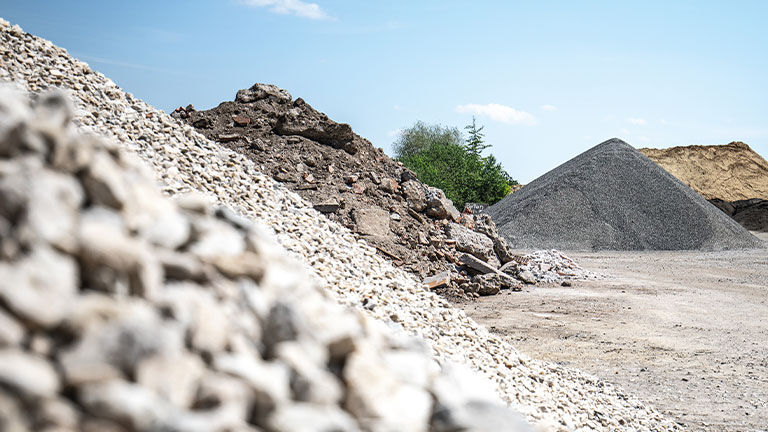
The wet mechanical treatment plant at the Eichenberg Waste Management Center cleans contaminated soil and excavated material, producing high-quality secondary raw materials that can be reused.
The contaminants contained in the soil are separated from the soil particles through a multi-stage process and concentrated in the filter cake based on their physical properties. This concentrated mass of contaminants—consisting of fine particles and adhering contaminants—is separated during the washing process, allowing the cleaned aggregates to be discharged. The soil “washed” in this manner, along with the resulting crushed stone and gravel, can then be used as a high-quality recycled product. In total, up to 80% of the previously contaminated input material can be reused.
Production of Quality-Controlled Recycled Construction Materials
At around 200 million metric tons, mineral waste accounts for the largest waste stream in Germany (Source: Bundesvereinigung Recycling-Baustoffe e. V.). This enormous volume of material consists, among other things, of construction and demolition waste such as concrete, construction debris, and soil, which is also generated during the rehabilitation of the transportation network.
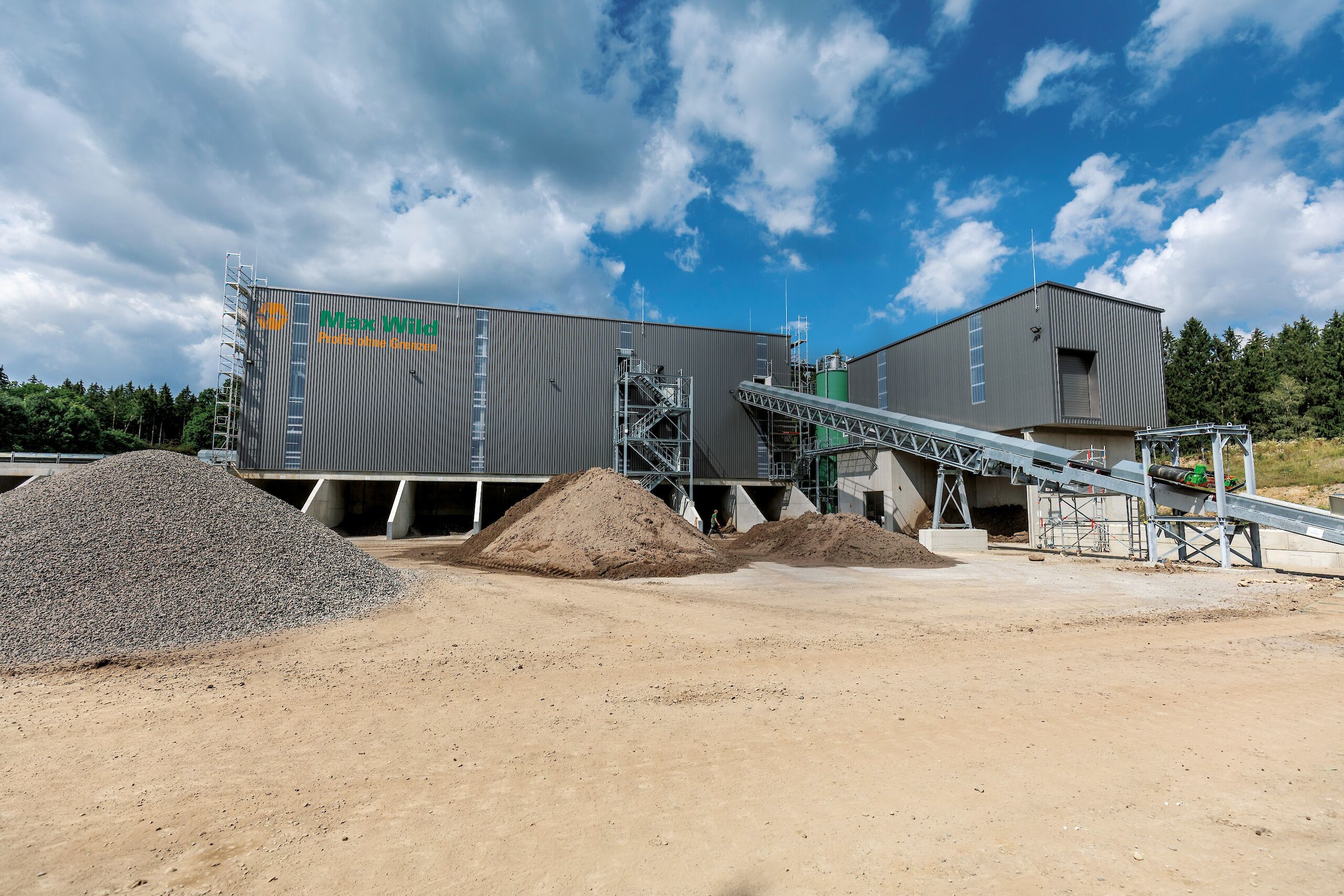
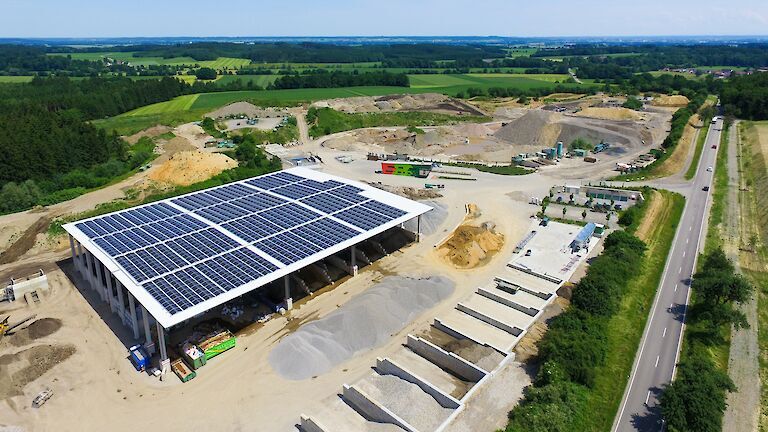
To manage these material streams in an organized and resource-efficient manner, Max Wild operates a recycling competence center at its Eichenberg site equipped with modern processing technologies. There, mineral waste is processed into quality-controlled recycled construction materials and other secondary raw materials, which can be reused depending on their suitability.
Secondary Raw Materials: Certified Recycled Building Materials for Construction
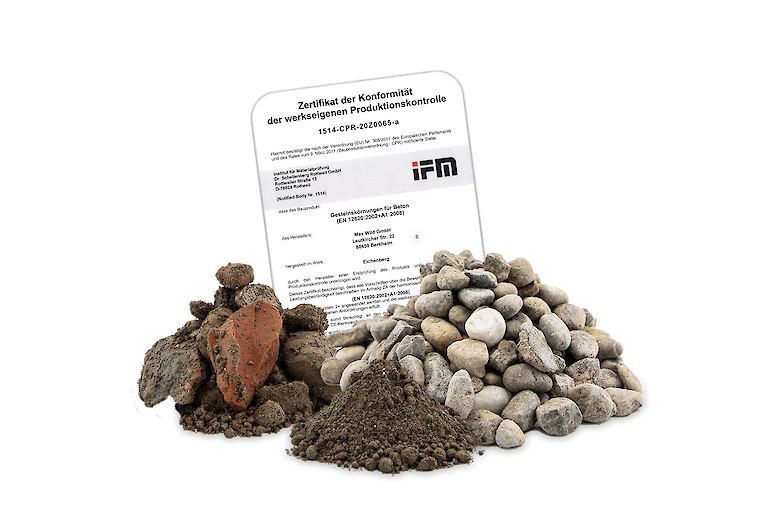
Since there is still some reluctance in many places regarding the use of secondary raw materials in the construction industry, the production of tested, quality-controlled, and certified recycled construction materials plays a central role. This is exactly what Max Wild does at the Eichenberg Waste Management Center: There, mineral waste is processed into secondary construction materials that meet the high quality standards for civil engineering and road construction—for example, as anti-freeze agents or subbase materials.
By using these recycled construction materials in these applications, companies can reduce their reliance on primary raw materials while simultaneously reaping economic benefits, such as reliable quality and high availability of the materials.

15,000 metric tons per month
are recycled at the Eichenberg Waste Management Center.
Certified Material for Reinstallation
Flooring following our wet mechanical processing: CE-certified products
- CE marking through third-party monitoring
- Products can also be used as aggregates in asphalt and concrete mixing plants
Possible uses for soil and construction debris after wet mechanical processing
- Concrete blocks
- Floor slabs
- Precast concrete elements
- Basement walls
- Floor slabs
- Asphalt aggregates
Ansprechpartner
Elias Haitz
Master of Engineering
Geschäftsfeldleiter Umwelt
Dr. Gregor Silvers
Strategieprojekte Umwelt